Who is the Hebrew-speaking ‘fox applying for the henhouse guard job?’
Lana Nusseibeh’s close alignment with Israel shadows her bid to lead the UN
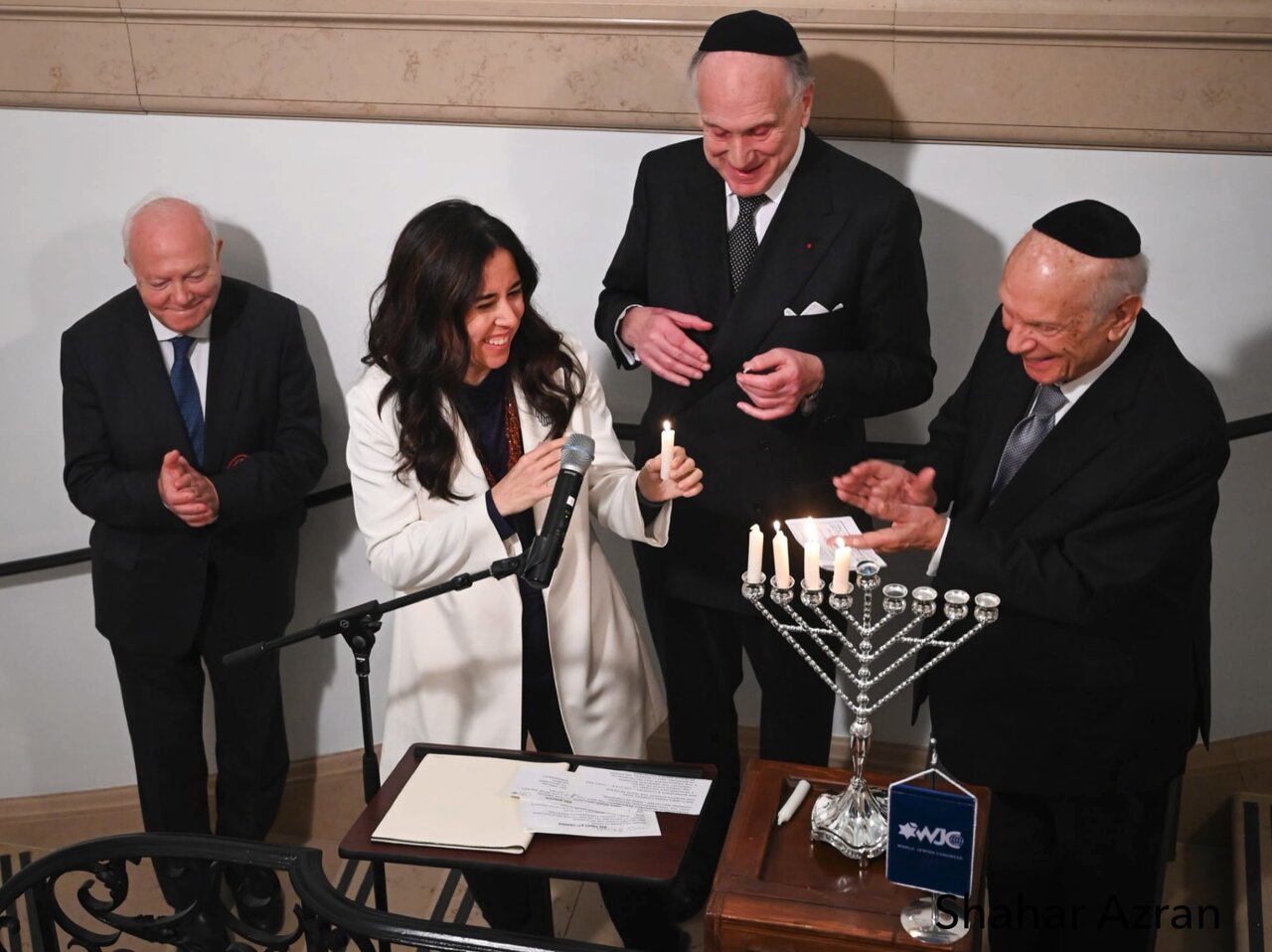
TEHRAN — Having spent years whitewashing Abu Dhabi’s submission to Israeli interests, Lana Nusseibeh is now being promoted by her handlers to run the United Nations.
Nominated on Oct. 21, the 48-year-old minister of state is the newest and most contested entrant in the race to succeed António Guterres, and the objections started within hours.
Nusseibeh was born in 1978 into a family in al-Quds (Jerusalem). Her grandfather Anwar sat in Jordanian governments, her father Zaki advises the UAE’s rulers, and her uncle Sari is a philosophy professor.
She read history at Cambridge, then took a master’s in “Israeli and Jewish Diaspora Studies” in London, where her teacher Colin Shindler later called her “instrumental” in the 2020 normalization deal. She is fluent in Hebrew.
In 2013, she became the UAE’s first female ambassador to the UN and stayed eleven years, twice presiding over the Security Council.
‘The fox applying for the henhouse guard job’
Weeks before the Abraham Accords were signed, she told the Emirati outlet The National that the “empty chair policy” toward Israel “had produced no peace.” She went on to host Israel’s then-UN envoy, Gilad Erdan, at the Emirati mission.
In March, she rushed to condemn Iran’s defensive counterstrikes against U.S. bases across the region, while ignoring the underlying U.S.-Israeli campaign of aggression that precipitated them. She uttered not a word regarding the loss of Iranian civilian lives, including the devastating American attack on an elementary school in Minab that killed 155 civilians, over 120 of them children.
Her defenders point to her September 2025 warning against Israel annexing the West Bank as proof of her independence. But a closer look shows she was actually protecting the anti-Palestine Abraham Accords, which formal annexation would have destroyed.
The UAE has kept and even upgraded its ties with Israel through every month of the ongoing genocidal war on Gaza, whose toll now exceeds 74,000.
Iranian Parliament Speaker Mohammad Bagher Ghalibaf reacted to her nomination in an X post. He called the bid a runway-clearing exercise for the “Greater Israel” project and a way to whitewash genocide, then added that “the fox is updating the LinkedIn profile to apply for the henhouse guard job.”
He attached excerpts of an interview in which she defends normalization with the genocidal Israeli regime.
The field and the arithmetic
Behind the sudden push lies Security Council arithmetic. In the Oct. 16 straw poll, front-runner Rebeca Grynspan of Costa Rica, who leads UNCTAD, secured nine “encourage” votes but faced “discourage” votes from two permanent members.
With IAEA Director General Rafael Grossi and Guyana’s diplomat Carolyn Rodrigues-Birkett capturing only two votes apiece, the Security Council vote ground to a halt, opening the door for Abu Dhabi’s push.
Into that deadlock stepped a candidate whom some observers now call the front-runner. Nusseibeh has quickly drawn support from a broad pro-Western coalition.
Key Washington voices, including Brett McGurk, as well as Israeli outlets such as Ynet and The Times of Israel, along with members of Tel Aviv’s foreign policy establishment, have welcomed her bid. Perversely and tragically, she is also backed by the Arab-led Persian Gulf Cooperation Council and the Palestinian Authority’s UN delegation.
Proxy networks and the independence question
Sudan poses a steep hurdle for Nusseibeh’s candidacy, casting a direct spotlight on Abu Dhabi’s aggressive regional posture.
A UN fact-finding mission reported in September reasonable grounds to believe UAE-linked entities armed and trained the Rapid Support Forces (RSF), fueling a devastating civil war and enabling genocidal massacres.
This policy forms part of a broader imperial strategy: across North Africa and the Horn, Abu Dhabi has cultivated proxy networks and armed non-state actors, from Khalifa Haftar’s forces in Libya to the Southern Transitional Council in Yemen and separatist movements in Somalia, fragmenting sovereign states to secure ports, gold-smuggling routes, and strategic influence.
In Sudan, this patronage network translated into direct logistical support for the RSF, causing deep friction across the Global South and making the UAE complicit in severe war crimes.
Justin Lynch, managing director of the Conflict Insights Group, told the AP that Nusseibeh operated as Abu Dhabi’s primary point person on Sudan, routinely offering assurances that the UAE was not aiding the RSF even while Washington and other Western capitals privately knew otherwise.
Lynch noted that the Secretary-General’s core duty is protecting civilians from atrocities such as the El Fasher siege, warning that “handing the job over to the diplomat who ran cover for it would be an insult to the survivors.”
Similarly, Nathaniel Raymond, executive director of Yale’s Humanitarian Research Lab, cited an insurmountable “dual loyalty” and conflict of interest.
Pointing out that the RSF’s assault on El Fasher was made possible by UAE-supplied drones, mortars, and logistics, Raymond argued that the UN should not mark the anniversary of the El Fasher massacre by appointing an official from the very state credibly accused of enabling the carnage.
Leave a Comment